
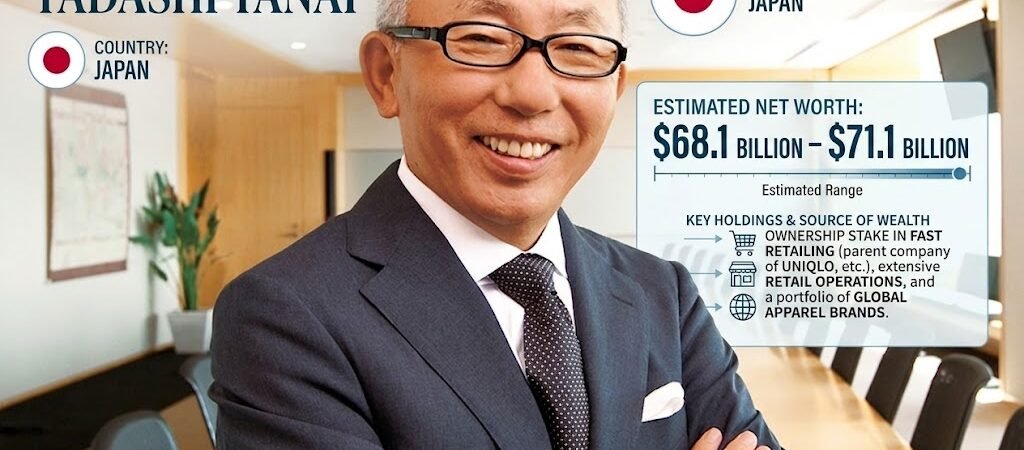
The development of modern apparel business is strongly linked with Tadashi Yanai, a figure whose journey reflects how a simple retail beginning can evolve into a worldwide commercial system. The transformation from a local clothing shop into Fast Retailing reshaped the structure of global fashion distribution, production thinking, and brand management.
Early Retail Foundation and Family Business Origin
Initial business activity started inside a small local clothing shop that focused on everyday menswear and basic garments. This environment provided practical exposure to customer behavior, product selection, and small-scale inventory management. Early operations were built on direct customer interaction and traditional retail methods, forming the base for future expansion.
Over time, this early exposure developed an understanding of market demand and retail flow, which later influenced larger strategic decisions in business growth.
Building Fast Retailing and Corporate Expansion
A major transition occurred when operations expanded beyond a single store into a structured corporate system known as Fast Retailing. This shift introduced centralized management and multi-brand development under one organization.
The company gradually developed a strong brand portfolio that includes UNIQLO, GU, Theory, Helmut Lang, Comptoir des Cotonniers, Princesse tam.tam, and J Brand. This combination covers multiple fashion categories ranging from daily wear to premium clothing segments.
Fast Retailing evolved into a large-scale apparel conglomerate, gaining influence across the global fashion retail industry.
UNIQLO Growth and Global Store Expansion
The introduction of UNIQLO marked a turning point in global retail growth. The brand expanded rapidly and became the central identity of Fast Retailing. Store presence now exceeds 2,000+ locations across more than 20+ countries, forming a strong international network.
Expansion strategy focuses on major global regions:
- Development across the US retail market
- Strong growth in China’s high-demand consumer base
- Increasing presence in digital and online retail platforms
This structured expansion strengthened global accessibility and brand recognition.
Product Strategy and Design Philosophy
UNIQLO operates on a clear product direction focused on high-quality basics and essential clothing items. The design approach prioritizes simplicity, durability, and universal use rather than fast-changing fashion trends.
A technology-driven apparel concept supports product development, where data analysis, material innovation, and functional design play a key role. This creates a structured product innovation model that emphasizes continuous improvement.
Instead of fast production cycles, the system relies on long-term production planning, ensuring consistent quality and supply stability. Development follows an iterative approach, improving design and materials over time.
Business Structure and Operational Philosophy
Fast Retailing operates through a disciplined system focused on efficiency, scalability, and global coordination. Decision-making is built on structured processes and long-term planning.
Key operational principles include:
- Strong leadership direction with execution focus
- Employee empowerment across organizational levels
- Clear corporate values guiding performance and responsibility
This system ensures consistent global operations while maintaining growth stability.
Sustainability and Social Responsibility Commitment
Modern expansion includes structured environmental programs focused on reducing industrial impact. Key areas include waste reduction, environmental responsibility, and recycling initiatives integrated across production systems.
Corporate social responsibility efforts include:
- Humanitarian support during global crises
- Refugee assistance programs in collaboration with international organizations
- Large-scale donation activities supporting displaced communities
These efforts integrate commercial success with global welfare contributions.
Financial Strength and Global Position
Fast Retailing’s success has positioned its leadership within global wealth rankings. Financial growth is mainly driven by company ownership and long-term business expansion.
Status is widely recognized within global billionaire rankings, reflecting strong equity performance and international retail success. Market fluctuations influence valuation, but overall position remains among the highest in global retail sector.
Strategic Leadership and External Influence
Business experience includes participation in major corporate environments beyond retail, contributing to broader strategic understanding. Exposure to external governance systems strengthened long-term planning and leadership capabilities.
Overall direction combines retail innovation, global expansion strategy, and operational discipline.
Strategic Leadership and External Influence
Business experience includes participation in major corporate environments beyond retail, contributing to broader strategic understanding. Exposure to external governance systems strengthened long-term planning and leadership capabilities.
Overall direction combines retail innovation, global expansion strategy, and operational discipline.
Global Retail Legacy and Industry Impact
Transformation from a small retail shop into a global system represents one of the major shifts in modern fashion industry structure. Fast Retailing demonstrates how disciplined execution and innovation can redefine global apparel standards.
Current impact reflects:
- Strong international expansion capability
- Dominant presence in global fashion retail
- Multi-brand business structure
- Continuous innovation in apparel systems
This evolution represents a long-term retail empire built on vision, structure, and global scalability.