
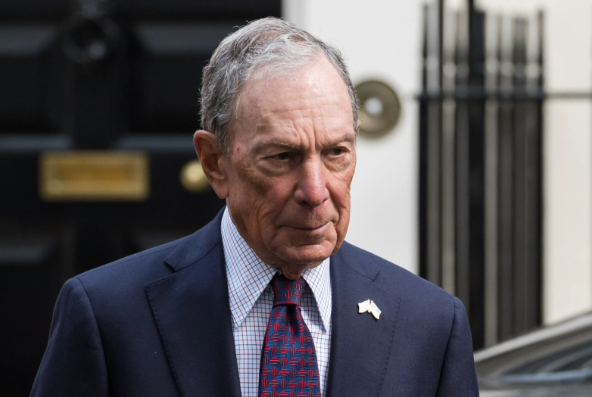
Michael Bloomberg is one of the wealthiest people in the world, with a net worth estimated at around $105–$106 billion. Unlike many tech billionaires whose wealth fluctuates daily with the stock market, Bloomberg’s fortune comes from his 88% ownership of Bloomberg LP, a private financial data and media company that generated nearly $15 billion in revenue in 2025. In this article, we will explore Bloomberg’s journey to wealth in a step-by-step manner.
Early Life and Education
Michael Bloomberg was born in 1942 in Boston, Massachusetts. From an early age, he showed determination and discipline. After high school, he attended Johns Hopkins University, where he earned a degree in Electrical Engineering. To fund his studies, he worked as a parking lot attendant, demonstrating early his willingness to work hard and be self-sufficient. Later, he earned an MBA from Harvard Business School, preparing him for a future in finance and management.
Early Career (1964–1966)
Bloomberg’s career began at Salomon Brothers, an investment bank, where he started as an entry-level employee. He gained hands-on experience in securities trading and financial markets. During these early years, he developed an understanding of how data and technology could improve financial decision-making, planting seeds for his future business ideas.
Career Pivot (1979–1981)
Bloomberg became a partner at Salomon Brothers, but he was later reassigned to oversee the firm’s computer systems. While some might view this as a demotion, Bloomberg saw it as an opportunity. In this role, he learned the potential of using technology to provide financial data in real time. This experience would later shape the foundation of Bloomberg LP.
The Turning Point: Golden Firing (1981)
In 1981, Salomon Brothers was acquired, and Bloomberg was let go with a $10 million severance package. Many would consider being fired a setback, but Bloomberg used this as a springboard for his next venture. This severance became the seed money for his startup, showing his ability to turn challenges into opportunities.
Founding Innovative Market Systems (1981–1982)
After leaving Salomon Brothers, Bloomberg founded Innovative Market Systems, later renamed Bloomberg LP. His goal was to provide real-time financial data to Wall Street professionals, a service that was in high demand but not widely available at the time. Bloomberg personally approached potential clients; he famously brought cups of coffee to Merrill Lynch every day until they agreed to become his first customer. This persistence helped establish his company’s credibility.
Scaling the Bloomberg Terminal (1986–Present)
The Bloomberg Terminal, the company’s main product, quickly became indispensable for financial professionals. By keeping Bloomberg LP private, Michael Bloomberg could reinvest profits into research and development, as well as media ventures such as Bloomberg News, Bloomberg Radio, and Bloomberg TV. This allowed the company to expand without answering to public shareholders and maintain a consistent vision.
Ownership and Control
Bloomberg gradually increased his stake in the company to 88% by buying back shares from early investors, including Merrill Lynch, in 1996 and 2008. This allowed him to maintain control over the company and make long-term strategic decisions without external pressures. By keeping control, he ensured that the company could continue growing steadily, contributing to his immense wealth.
Is Bloomberg’s Wealth “Real” Cash?
While Bloomberg’s net worth is an estimate, it is considered highly stable for several reasons:
1. Valuable Product: Over 350,000 subscribers pay $24,000–$30,000 annually for Bloomberg Terminals, ensuring steady revenue.
2. High Cash Flow: The company’s strong profits enable Bloomberg to fund large-scale philanthropy and political campaigns without affecting his wealth.
3. Private Structure: Being privately held shields Bloomberg LP from market volatility, unlike public companies owned by other tech billionaires.
Key Highlights and Philanthropy (2025–2026)
Bloomberg is not only a businessman but also a leading philanthropist. In 2025, he was recognized as the top donor, giving $4.3 billion to arts, education, public health, and environmental initiatives. Over his lifetime, he has donated more than $21 billion. Through Bloomberg Philanthropies, he focuses on climate change, gun safety, and public health programs. In 2024, he pledged $600 million to four historically Black medical schools, showing his commitment to education and social equity.
Wealth and Asset Management
Bloomberg LP, founded in 1981, generates nearly $15 billion in annual revenue. Michael Bloomberg has committed to donating his stake to Bloomberg Philanthropies after his death, ensuring that the company continues to fund charitable initiatives. In 2023, he appointed Vlad Kliatchko as CEO to oversee daily operations, demonstrating thoughtful succession planning.
Public Life and Political Engagement
Bloomberg has also been active in politics. In 2020, he spent over $500 million on a presidential campaign. During the 2024 election, he donated approximately $50 million to the non-profit Future Forward USA Action, supporting Kamala Harris’s campaign. His political contributions reflect a strategy of influencing causes he cares about while using his own resources effectively.
Lessons from Bloomberg’s Journey
1. Spot Opportunities: Identifying unmet needs and taking action is key to creating value. Bloomberg saw the gap in financial data services and filled it.
2. Invest in Yourself: Education and skill-building provided a strong foundation for his career.
3. Take Calculated Risks: Using his severance to start Bloomberg LP shows how measured risk-taking can lead to big rewards.
4. Maintain Control: Owning a majority stake allows strategic decisions without external interference.
5. Diversify and Give Back: Strategic investments and philanthropy help build wealth and leave a positive societal impact.
Real-World Technology Analogy
Bloomberg’s use of technology is akin to improving everyday tools. Just as a Bloomberg Terminal speeds up financial analysis, applying tips like phone speed-up, Android phone lag fix, or learning how to make an Android phone faster in 2026 can enhance efficiency in daily life. Understanding user needs and creating solutions are shared principles across business and personal tech.
Conclusion
Michael Bloomberg’s path to a net worth of $105–$106 billion demonstrates the power of innovation, persistence, and strategic thinking. By leveraging education, technology, and smart investments, he built one of the world’s most valuable private companies. His philanthropy and political engagement demonstrate that wealth can also drive meaningful change.
FAQ
Q: How did Michael Bloomberg start Bloomberg LP?
A: He used his severance package from Salomon Brothers to start Innovative Market Systems, which later became Bloomberg LP.
Q: Why is his wealth considered stable?
A: High-value products, consistent cash flow, and private company status make his net worth more reliable than many public-company billionaires.
Q: Can his path inspire ordinary people?
A: Yes, focusing on problem-solving, skill development, risk-taking, and diversification offers practical guidance.
Q: How much has Bloomberg given to charity?
A: Over $21 billion in his lifetime, with significant annual donations like $4.3 billion in 2025.
Q: How does his tech focus relate to everyday tech use?
A: Like using apps to speed up phone calls or applying Android phone lag fix techniques, Bloomberg leveraged technology to increase efficiency.